Freshwater Species Guide
American Shad
Alosa sapidissima · Clupeidae
At a Glance
Ideal Temp
55–65°F
Typical Weight
2–5 lbs
Record Weight
11 lbs 4 oz
Average Length
16–24 inches
Lifespan
5–9 years
Peak Activity
Spring run — morning
Skill Level
Beginner
Overview
The "poor man's salmon." Every spring, millions of American shad leave the Atlantic Ocean and run up East Coast rivers to spawn — the largest herring species in North America creating one of the most predictable and exciting fisheries of the year. They fight like fish twice their size, leaping and running on light tackle. A 5-lb shad on a 6-weight fly rod or ultralight spinner is a genuinely thrilling experience, and the fishing is accessible to anyone who can cast a small lure into current.
Habitat
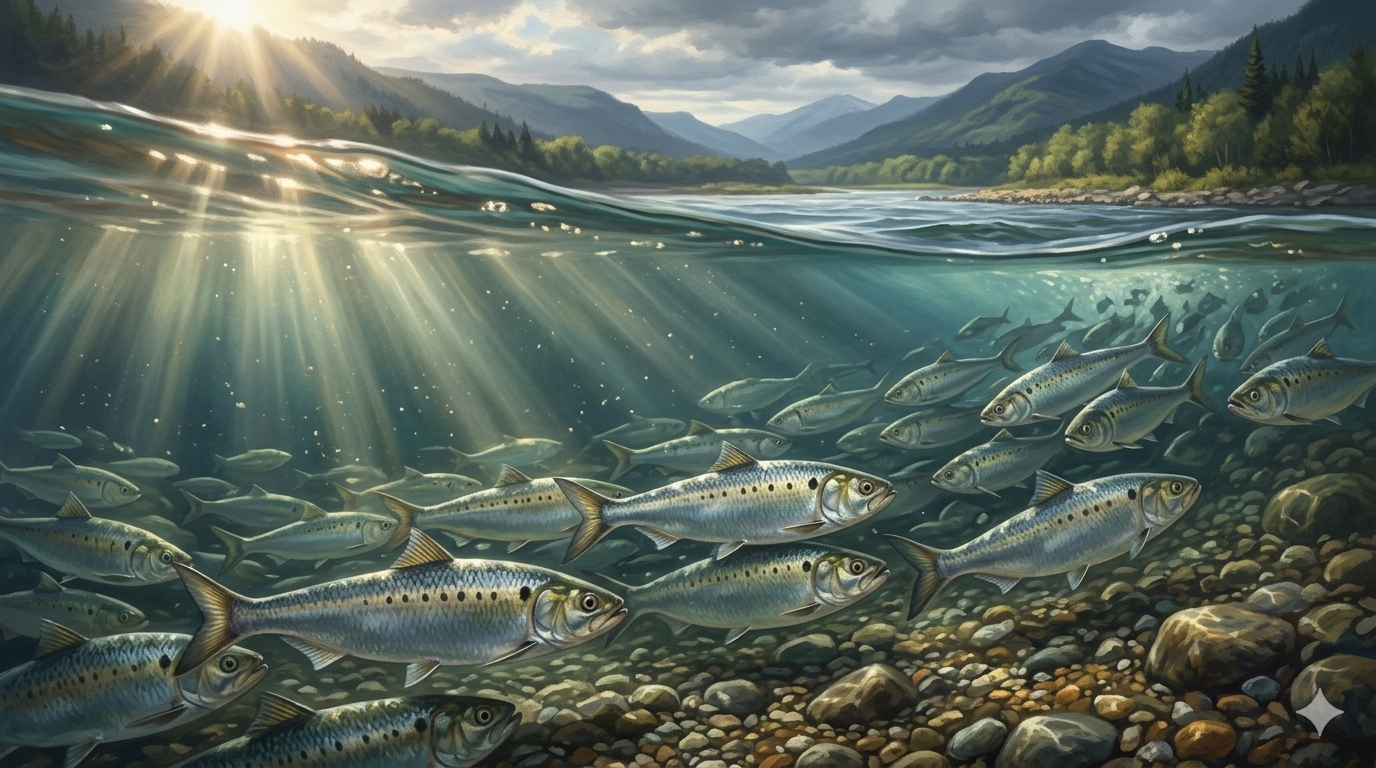
Anadromous — they spend most of their lives in the Atlantic Ocean and return to rivers to spawn each spring. During the run, they migrate up every major East Coast river from Florida to Maine, concentrating below dams and in deep pools where they rest during upstream migration. The Connecticut, Delaware, Susquehanna, and Potomac rivers are among the most famous shad fisheries.
Feeding Behavior
In the ocean, shad feed on plankton and small crustaceans. During the spawning run, they largely stop feeding — but they will strike small, brightly colored lures out of aggression or reflex. Shad darts (small weighted jigs) in chartreuse, white, and pink are the standard. The strike is a reflex reaction to something flashing through their path, not a feeding response.
Spawning
Spawn in spring when river temperatures reach 55–65°F. Timing progresses north with warming water — March in the South, May–June in New England. Shad broadcast spawn in current over gravel and sand. After spawning, some fish die (southern populations) while northern populations often survive to spawn multiple times.
Seasonal Patterns
Spring
THE season. Spawning run concentrates fish in rivers. Fast action on small darts and flies.
Summer
In the ocean. Not available for freshwater fishing.
Fall
In the ocean. Not available for freshwater fishing.
Winter
In the ocean. Not available for freshwater fishing.
Top Lures for American Shad
Best Techniques
Pro Tips
Timing is everything — the shad run follows water temperature north along the East Coast. Track river temps in your area and plan your trip when water hits 55–60°F.
Shad darts in 1/8 to 1/4 oz in chartreuse, white, and pink are the standard. Cast upstream, let the dart sink, and retrieve across the current with short, sharp strips.
Use light tackle — 6 lb test on an ultralight spinning rod or a 6-weight fly rod. Shad are powerful jumpers and the fight on light gear is spectacular.
Fish below dams. Shad stack up where they can't continue upstream, creating incredible concentrations. Early morning is typically best.
Did You Know
American shad were so important to colonial America that George Washington's troops at Valley Forge were partially saved from starvation by a massive shad run on the Schuylkill River in spring 1778. The fish literally helped win the American Revolution.
Regulations Note
Seasonal fishing only during the spring run. Check state timing and bag limits — many rivers have catch-and-release only periods.
Plan Your Next Trip
Get Your American Shad Strike Plan
Enter your location and date — the Darkhorse Strike Plan pulls live weather, barometric pressure, and solunar data to give you exact lures and techniques for today.