Freshwater Species Guide
Burbot
Lota lota · Gadidae
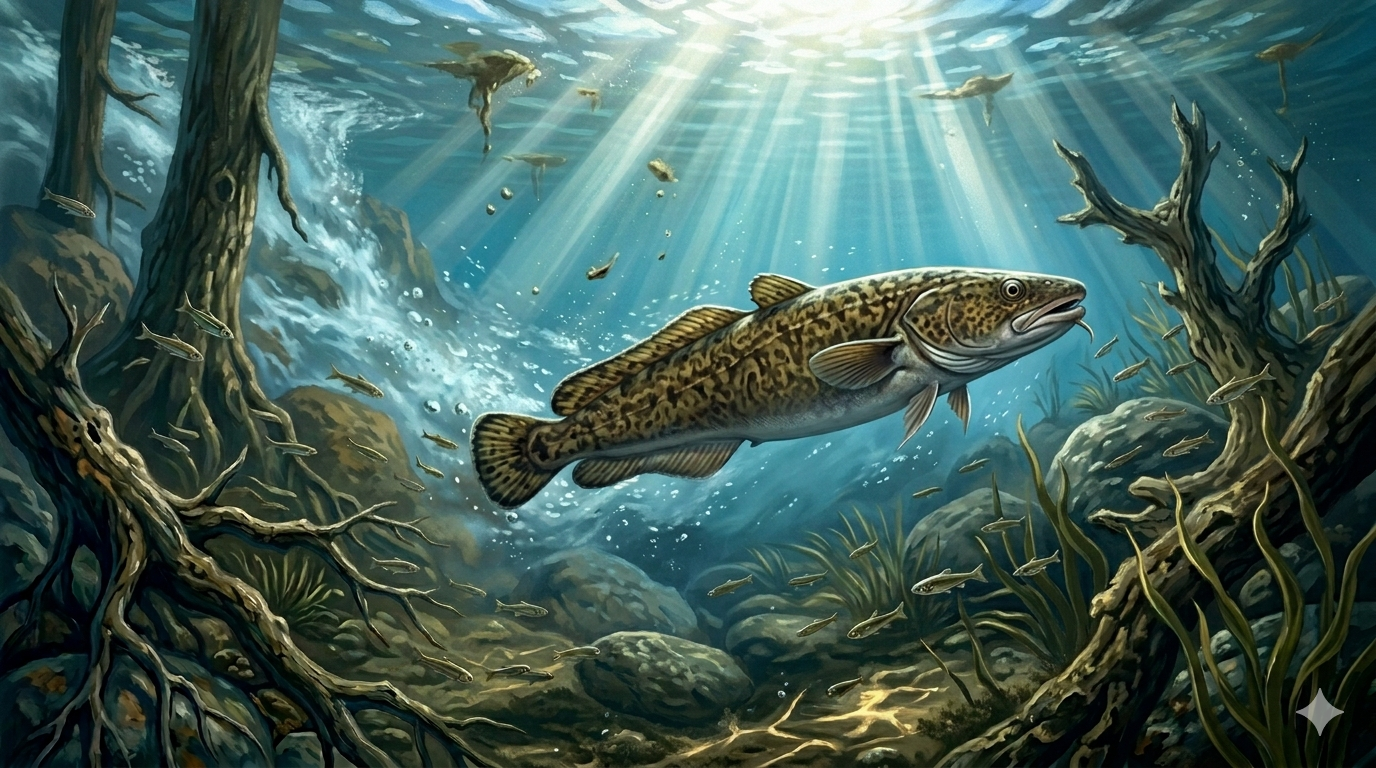
At a Glance
Ideal Temp
32–45°F
Typical Weight
1–5 lbs
Record Weight
25 lbs
Average Length
14–24 inches
Lifespan
10–20 years
Peak Activity
Night / Winter
Skill Level
Beginner
Overview
The freshwater cod that nobody talks about — until ice fishing season. Burbot are the only true freshwater member of the cod family, and their meat tastes remarkably like lobster when prepared correctly. They're nocturnal, eel-shaped, slimy, and utterly bizarre looking. And yet, dedicated ice anglers across the northern US and Canada have discovered what may be the best-kept secret in freshwater fishing: burbot are most active in the dead of winter, at night, when everything else has shut down.
Habitat
Deep, cold lakes and rivers in the northern US, Canada, and Alaska. Burbot inhabit the coldest water available year-round — deep lake basins, cold river pools, and areas near cold-water springs. They're bottom dwellers that hug structure like rock piles, points, and gravel transitions. In summer they're nearly dormant in the deepest, coldest water. In winter they come alive.
Feeding Behavior
Nocturnal predators. Burbot eat fish (primarily cisco, whitefish, and perch), crayfish, and freshwater clams. Their feeding activity increases dramatically as water cools below 45°F — the opposite of nearly every other freshwater species. Peak feeding occurs January through March, often after midnight.
Spawning
Spawn under the ice in January–March at water temps of 33–35°F — the coldest spawning temperature of any freshwater fish. Males and females form writhing spawning balls over sand and gravel in shallow water. This mid-winter spawn is why they're so active and catchable during ice fishing season.
Seasonal Patterns
Spring
Post-spawn feeding before summer dormancy. Still active in cold water through April.
Summer
Nearly dormant. Holding in deepest, coldest available water. Not a realistic target.
Fall
Waking up as water cools. Moving shallower. Night feeding activity increasing.
Winter
Peak season. Spawning and aggressive feeding — the best burbot fishing of the year, at night, under ice.
Top Lures for Burbot
Best Techniques
Pro Tips
Fish at night — burbot are overwhelmingly nocturnal. Set up after dark and fish until midnight or later. The best burbot anglers never see daylight on the ice.
Glow jigs and glow paint on spoons make a significant difference in dark conditions under ice. Charge them with a headlamp between drops.
Burbot meat is often called "poor man's lobster" — boil chunks in salted water with butter and the flavor and texture genuinely resemble lobster tail.
Don't be afraid to go big — burbot have large mouths and eat big prey. A 4-inch glow jig tipped with a large minnow or cut cisco is a standard burbot presentation.
Did You Know
Burbot are the only freshwater member of the cod family (Gadidae). They spawn under the ice in mid-winter by forming communal spawning balls where dozens of fish writhe together over the bottom — one of the strangest reproductive behaviors in freshwater.
Regulations Note
Check state regulations. Often overlooked with few restrictions. Many states have liberal or no bag limits.
Plan Your Next Trip
Get Your Burbot Strike Plan
Enter your location and date — the Darkhorse Strike Plan pulls live weather, barometric pressure, and solunar data to give you exact lures and techniques for today.