Freshwater Species Guide
Chinook Salmon (King)
Oncorhynchus tshawytscha · Salmonidae
At a Glance
Ideal Temp
44–58°F
Typical Weight
10–30 lbs
Record Weight
97 lbs 4 oz
Average Length
28–40 inches
Lifespan
3–7 years
Peak Activity
Dawn / Dusk
Skill Level
Advanced
Overview
They're called "kings" for a reason. Chinook salmon are the largest Pacific salmon — fish that routinely exceed 30 lbs and can top 60 lbs in prime Alaskan rivers. When a king salmon takes your bait in heavy current, the initial run is genuinely alarming. They peel line with unstoppable force, using the river's current to multiply their power. In the Great Lakes, trolling for kings is a major fishery. In Pacific Northwest and Alaskan rivers, the king salmon run is the most anticipated fishing event of the year.
Habitat
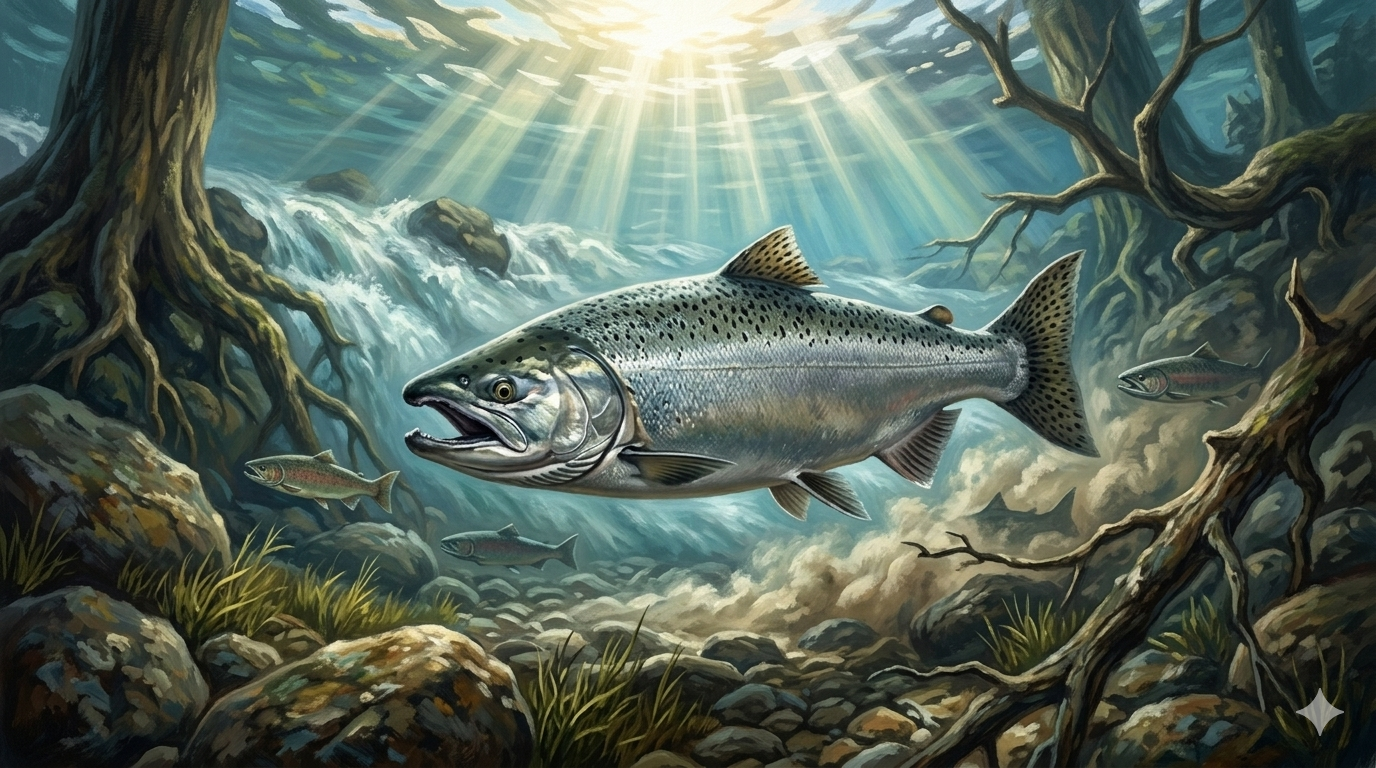
Anadromous — spend most of their lives in the ocean (Pacific) or Great Lakes, then return to rivers to spawn. In the ocean/lakes, kings roam cold, open water tracking baitfish. During spawning runs, they enter rivers and push upstream through rapids and deep pools to reach ancestral spawning gravel. Major fisheries exist in Alaska, the Pacific Northwest, and Great Lakes tributaries in Michigan, Wisconsin, and New York.
Feeding Behavior
In the ocean and Great Lakes, kings are apex predators eating herring, alewife, smelt, and other fish. They grow rapidly on this high-protein diet. During spawning runs in rivers, they largely stop feeding but will strike lures and bait out of aggression and territorial instinct. Bright spoons, plugs, and cured eggs trigger reflex strikes from fish that aren't actually hungry.
Spawning
Spawn in fall (September–November) in clean gravel rivers and streams. Females dig redds (nests) in gravel, deposit eggs, and cover them. Males fight for spawning access. All Pacific chinook die after spawning. Great Lakes chinook also die after spawning. The spawning run creates a massive nutrient transfer from ocean to forest ecosystem.
Seasonal Patterns
Spring
Active feeding in lakes and nearshore ocean. Trolling produces fish as they chase baitfish.
Summer
Early run fish entering rivers. Lake fishing remains strong. Ocean fish staging near river mouths.
Fall
Peak spawning run. Fish pushing upstream. Concentrated in deep pools and below rapids. Most accessible and exciting fishing.
Winter
Deep in lakes. Limited activity. Some late-run fish still in rivers in early winter.
Top Lures for Chinook Salmon (King)
Best Techniques
Pro Tips
In rivers, let your presentation bounce along the bottom in deeper pools and runs. Kings hold near the bottom in current — your bait needs to be in their face, not above them.
Cured salmon eggs are the #1 river bait across all king salmon fisheries. Learn to cure your own with borax or commercial cure — fresh-cured eggs dramatically outperform store-bought.
Use heavy gear. A 10–12 lb king in fast current fights like a 30-lb fish. Medium-heavy to heavy rods with 15–20 lb line are the standard. Don't bring a bass rod to a king fight.
In Great Lakes tributaries, focus on the first major runs after fall rains raise river levels. Fresh fish entering the system are the most aggressive and least pressured.
Did You Know
The world record chinook salmon weighed 97 lbs 4 oz — caught in the Kenai River, Alaska. Kings this large are estimated to be 7+ years old and have spent years feeding in the rich North Pacific before returning to spawn. Fish over 50 lbs are called "hogs" or "slabs" by Alaskan guides.
Regulations Note
Heavily regulated. Season, harvest, and gear restrictions vary by river system. Many rivers have specific run quotas. Always check current regulations.
Plan Your Next Trip
Get Your Chinook Salmon (King) Strike Plan
Enter your location and date — the Darkhorse Strike Plan pulls live weather, barometric pressure, and solunar data to give you exact lures and techniques for today.