Freshwater Species Guide
Kokanee Salmon
Oncorhynchus nerka · Salmonidae
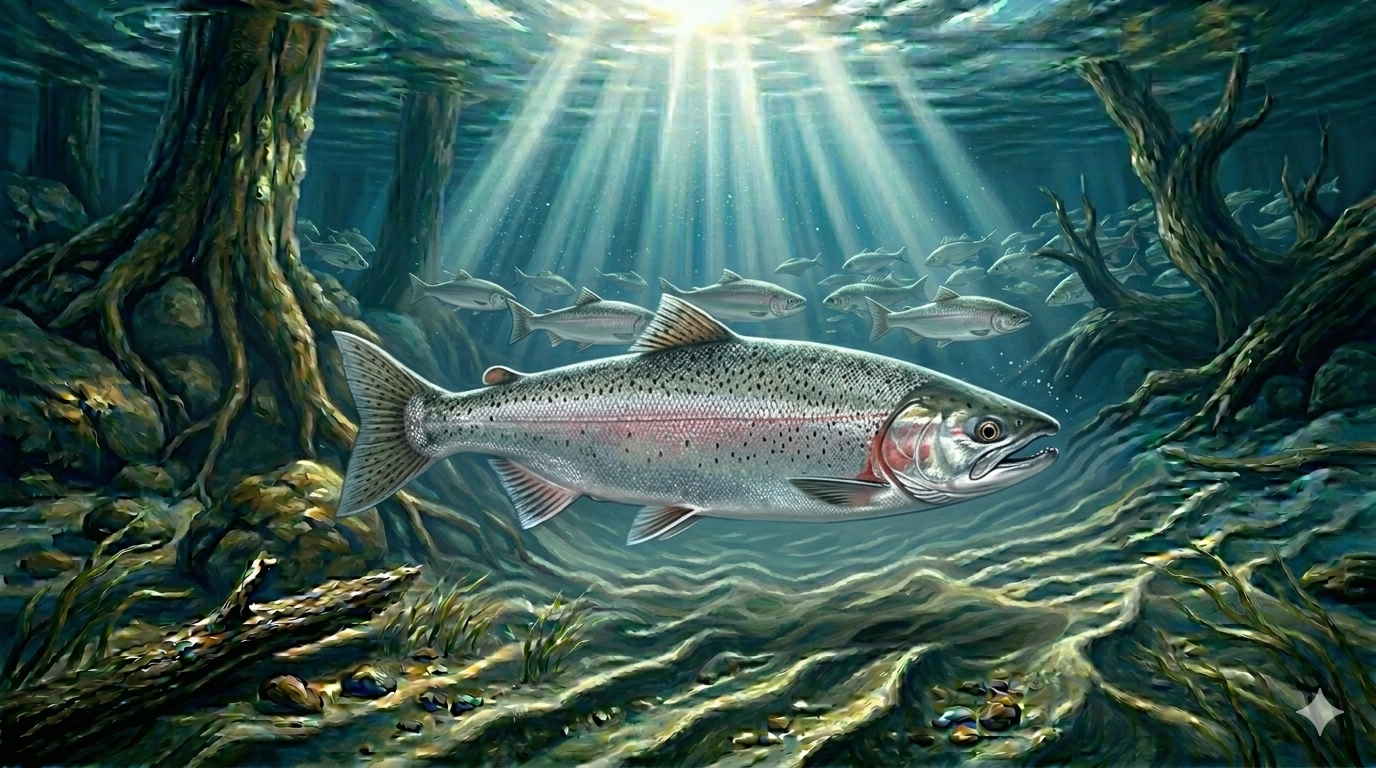
At a Glance
Ideal Temp
46–54°F
Typical Weight
0.5–3 lbs
Record Weight
9 lbs 6 oz
Average Length
10–18 inches
Lifespan
4–5 years
Peak Activity
Morning
Skill Level
Intermediate
Overview
Landlocked sockeye salmon — smaller than their ocean-going relatives but with the same brilliant crimson spawning colors and arguably the best-tasting flesh of any freshwater fish. Kokanee are a western mountain lake specialty, stocked in cold, deep reservoirs and natural lakes from British Columbia to Colorado. They're a trolling and jigging fish that requires precision depth control, and when you find the school, the action can be fast and the freezer fills quickly.
Habitat
Cold, deep, clear lakes and reservoirs in the western US and Canada. Kokanee are pelagic — they roam open water in schools, following zooplankton at specific depth bands dictated by water temperature. In summer, they concentrate in the thermocline layer (typically 30–60 ft deep). In spring and fall, they move shallower. They need water below 60°F and well-oxygenated depths.
Feeding Behavior
Unlike other salmon, kokanee are plankton feeders — they eat tiny zooplankton and aquatic insects filtered from the water column. This is why they respond to small, flashy lures like hoochies, wedding ring spinners, and tipped jigs rather than large baitfish imitations. The flash and color attract them; the small size matches their feeding behavior.
Spawning
Spawn in fall (September–November) in tributary streams or on lakeshore gravel. Males turn brilliant crimson with green heads — the same dramatic coloration as ocean sockeye. All kokanee die after spawning. Shore-spawning kokanee create spectacular wildlife viewing events.
Seasonal Patterns
Spring
Shallower than summer. Active feeding after ice-out. Trolling at moderate depths is productive.
Summer
Peak kokanee season. Schools concentrated at thermocline depth. Precise depth control is everything.
Fall
Pre-spawn staging near tributary mouths. Males turning red. Some shore fishing possible.
Winter
Catchable through ice in western mountain lakes. Schools suspend at consistent depths.
Top Lures for Kokanee Salmon
Best Techniques
Pro Tips
Depth precision is everything. Use a fish finder to locate the school depth and set your downrigger or presentation to within 2 feet of that depth. Kokanee won't come up or down to your lure.
Tip your hooks with a single maggot or piece of shoepeg corn. Kokanee have small mouths and the scent/taste addition dramatically increases hookup rates.
Kokanee have very soft mouths — use a light drag and don't horse them. Barbless hooks are required in many kokanee fisheries and actually help reduce tear-outs.
The meat is exceptional — bright orange flesh with a rich, clean flavor. Kokanee is widely considered the best-eating freshwater fish in the West.
Did You Know
Kokanee are genetically identical to ocean-going sockeye salmon — the only difference is that kokanee became landlocked in freshwater lakes after the last ice age. Given access to the ocean, kokanee offspring can revert to the anadromous sockeye life history.
Regulations Note
Check state stocking schedules and limits. Often run-specific regulations. Barbless hooks frequently required.
Plan Your Next Trip
Get Your Kokanee Salmon Strike Plan
Enter your location and date — the Darkhorse Strike Plan pulls live weather, barometric pressure, and solunar data to give you exact lures and techniques for today.