Freshwater Species Guide
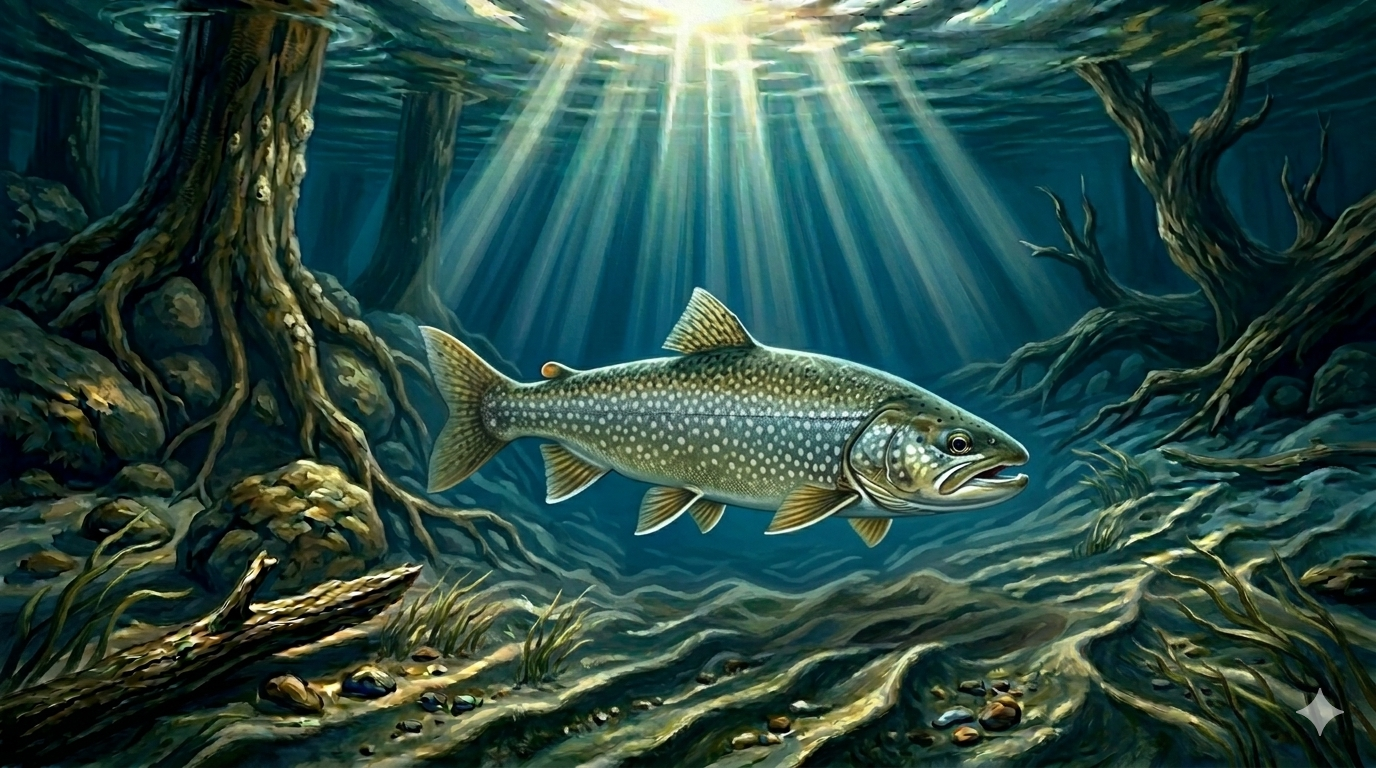
Lake Trout
Salvelinus namaycush · Salmonidae
At a Glance
Ideal Temp
42–55°F
Typical Weight
3–15 lbs
Record Weight
102 lbs
Average Length
18–30 inches
Lifespan
25–60 years
Peak Activity
Morning / Ice season
Skill Level
Intermediate
Overview
Lake trout are the deep-water kings of cold, clear lakes. Built for the abyss — living in 60–150 ft of water for most of the year, chasing cisco and whitefish through the darkness. But when ice forms and the water column turns over, they become accessible and aggressive in a way that makes ice anglers seriously addicted. A 20-lb laker hammering a jigging spoon 60 feet down is something you don't forget.
Habitat
Cold, deep, clear lakes with high oxygen levels throughout the water column. They track the thermocline year-round, following their primary prey — cisco, smelt, and whitefish. In summer, lakers live at the coldest available depth. Ice-over brings them shallower and makes them far more catchable.
Feeding Behavior
Almost exclusively fish — cisco, whitefish, smelt, and other deep-water prey species. Will eat crustaceans and invertebrates but protein is the priority. More aggressive and wide-ranging than most deep-water species; they cover serious ground to find baitfish schools.
Spawning
Fall spawners on rocky shoals — uniquely, they spawn in lakes rather than running to streams. October–November when water cools to 48–55°F. Males arrive first on rocky reefs and prepare the spawning areas. No nest is built — eggs fall into rock crevices.
Seasonal Patterns
Spring
Recently accessible after ice-out. Feeding aggressively in shallower water before summer stratification forces them deep.
Summer
Deep in the cold layer, following thermocline and baitfish schools. Trolling is the most effective method.
Fall
Spawning activity and aggressive pre-spawn feeding on shallow rocky reefs. Best topwater accessible season.
Winter
Ice fishing peak. Lakers are most accessible and actively feeding. Aggressive jigging produces best results.
Top Lures for Lake Trout
Best Techniques
Pro Tips
Ice fishing peak is just after freeze-up — the turnover brings lakers shallower and they feed aggressively. Don't wait for mid-winter; go early.
Use large presentations — a laker that eats 12-inch cisco won't hesitate to smash a 5-inch tube jig or large jigging spoon. Don't fish small.
In summer, troll with downriggers or lead-core line to track them in the cold water layer (often 40–80 ft). Trolling speed matters — slightly faster than you think.
Lakers hit hard and then immediately swim toward you — reel fast on the initial run or you'll miss the hook-set entirely.
Did You Know
Lake trout can live 60+ years and have been reliably documented at 100+ lbs in the largest Canadian Shield lakes. The oldest confirmed lake trout was 62 years old. They are one of the slowest-growing, longest-lived sport fish in North America.
Regulations Note
Bag limits and size limits vary. Many trophy fisheries in Canada.
Plan Your Next Trip
Get Your Lake Trout Strike Plan
Enter your location and date — the Darkhorse Strike Plan pulls live weather, barometric pressure, and solunar data to give you exact lures and techniques for today.