Freshwater Species Guide
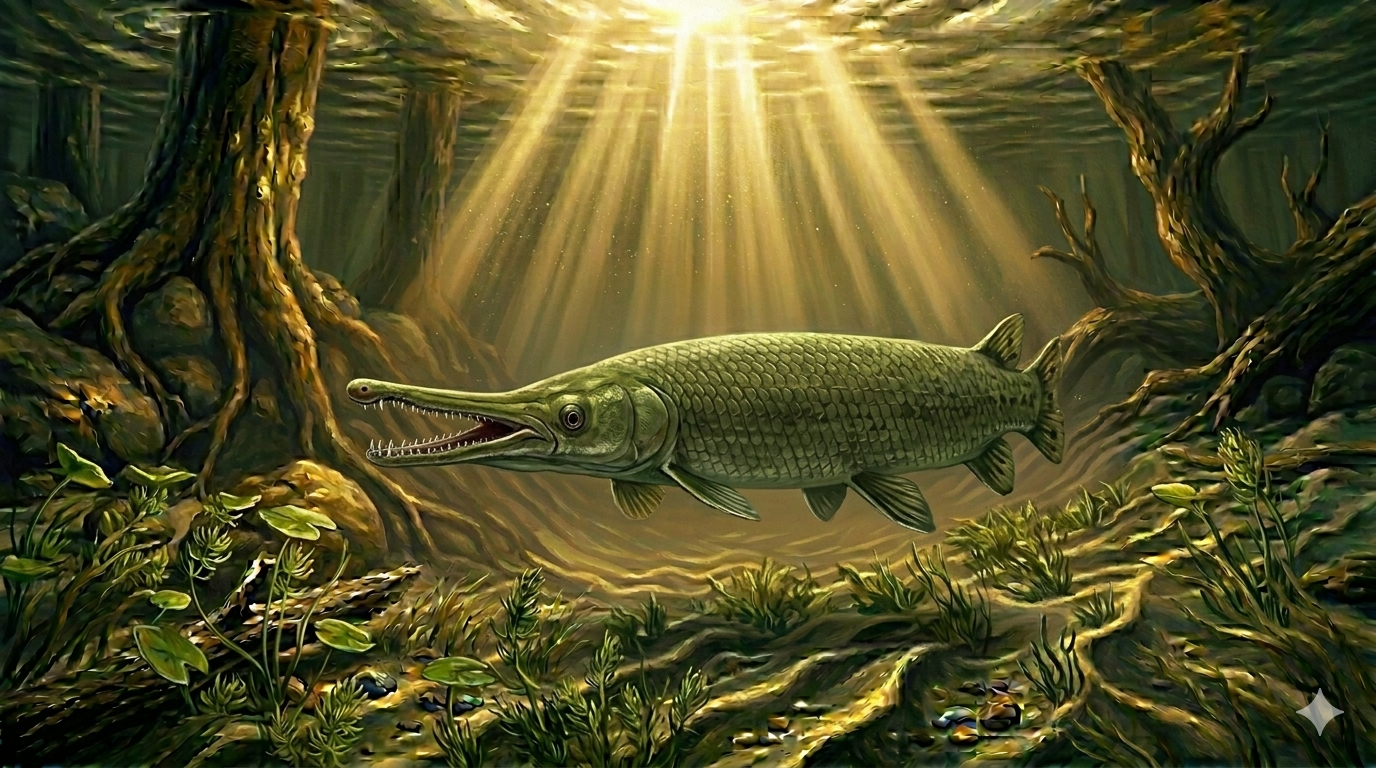
Longnose Gar
Lepisosteus osseus · Lepisosteidae
At a Glance
Ideal Temp
65–85°F
Typical Weight
3–10 lbs
Record Weight
50 lbs 5 oz
Average Length
24–48 inches
Lifespan
15–20 years
Peak Activity
Midday
Skill Level
Intermediate
Overview
Another living fossil — longnose gar have been swimming in North American rivers for 100 million years, and they look every bit of it. A long, cylindrical body covered in diamond-shaped ganoid scales that are genuinely armor-plated, topped by a narrow snout filled with needle-sharp teeth. They're virtually impossible to hook conventionally, which is why the legendary "rope lure" technique exists: a frayed nylon rope that tangles in their teeth where hooks can't penetrate.
Habitat
Slow rivers, backwaters, oxbow lakes, and the shallow bays of reservoirs throughout the eastern US. Gar are surface-oriented, frequently seen basking or slowly cruising near the surface where they gulp air. They're tolerant of warm, low-oxygen water and often inhabit the same weedy, murky backwaters as bowfin. The Mississippi River drainage holds the highest concentrations.
Feeding Behavior
Ambush predators that specialize in lateral strikes. Gar don't eat like other fish — they approach prey from the side, slash with their elongated jaws, then reposition the stunned prey headfirst before swallowing. This sideways strike is why conventional hooksets fail. Live minnows, cut bait, and shiners presented near the surface work, but the rope lure is the most reliable method.
Spawning
Spawn in late spring and early summer when water reaches 68–76°F. Gar move to shallow, weedy areas and scatter adhesive eggs over vegetation. The eggs are toxic to mammals — do not eat gar roe. No parental care after spawning.
Seasonal Patterns
Spring
Moving to spawning areas. Visible near the surface in warming water. Increasingly active.
Summer
Peak activity. Visible basking at the surface. Most catchable when spotted and sight-fished.
Fall
Active feeding before winter slowdown. Still visible near the surface on warm days.
Winter
Mostly inactive. Holding in deepest, warmest available water.
Top Lures for Longnose Gar
Best Techniques
Pro Tips
The rope lure is the key — take 4–5 inches of braided nylon rope and fray the end into a fuzzy mass of fibers. Gar's needle teeth tangle in the fibers where hooks can't catch. Drag it past visible gar and let them grab it.
Don't set the hook immediately. When a gar grabs the rope lure, let it hold on for 10–15 seconds to get thoroughly tangled before you pull tight.
Gar eggs are toxic — never eat gar roe. The meat, however, is edible and quite good when prepared properly. Score the fillets through the tough scales and deep fry.
Look for gar basking at the surface on warm, sunny days. They're easy to spot and you can sight-cast to individual fish.
Did You Know
Longnose gar scales are so tough that Native Americans used them as arrowheads. The diamond-shaped ganoid scales are essentially a suit of bone armor — no predator in freshwater can bite through them, which is one reason gar have survived virtually unchanged for 100 million years.
Regulations Note
Few regulations in most states. Some areas have minimum size limits. Increasingly appreciated as a sport fish.
Plan Your Next Trip
Get Your Longnose Gar Strike Plan
Enter your location and date — the Darkhorse Strike Plan pulls live weather, barometric pressure, and solunar data to give you exact lures and techniques for today.