Freshwater Species Guide
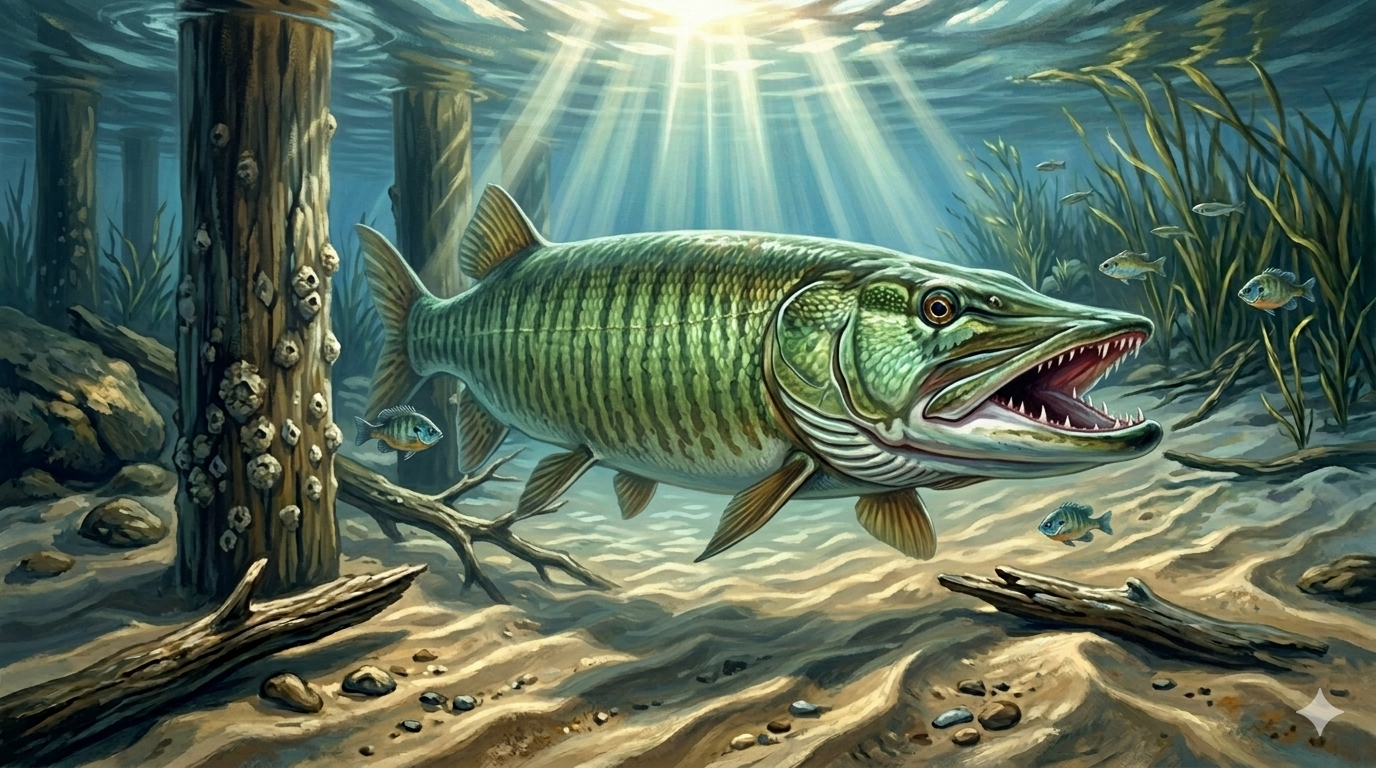
Muskellunge
Esox masquinongy · Esocidae (Pike family)
At a Glance
Ideal Temp
55–70°F
Typical Weight
10–30 lbs
Record Weight
67 lbs 8 oz
Average Length
30–48 inches
Lifespan
20–30 years
Peak Activity
Morning / Evening
Skill Level
Advanced
Overview
"The fish of 10,000 casts." You can fish all day, every day, for weeks and never get a follow. Then one morning a 50-inch prehistoric predator materializes out of the depths behind your lure and eats it boatside. There is nothing like muskie fishing. It's an obsession that rewires you permanently.
Habitat
Large clear lakes, big rivers with good structure. Weed edges, deep points, submerged timber, rocky ledges. They're solitary apex predators with specific home territories.
Feeding Behavior
Ambush predator that eats large prey — suckers, perch, walleye, ducks, muskrats. They study their prey before striking. The figure-8 at boatside triggers following fish.
Spawning
Spawn in spring at 48–56°F in shallow weedy bays, just after northern pike. No nest building.
Seasonal Patterns
Spring
Post-spawn recovery then aggressive feed. Shallow weed bays.
Summer
Active early and late. Following but not committing. Fall trigger needed.
Fall
Pre-winter feed. The best muskie fishing of the year. They commit.
Winter
Largely inactive. Not recommended.
Top Lures for Muskellunge
Best Techniques
Pro Tips
Every cast deserves a full figure-8 at boatside. Period. No exceptions.
Speed matters — vary your retrieve until you trigger a follow, then match that speed.
Catch and release all large females (over 42 inches). These fish are irreplaceable.
Did You Know
Muskie grow 1 inch per year on average. A 50-inch fish is roughly 40 years old. Handle with extreme care and release quickly — these fish are irreplaceable.
Regulations Note
Strict regulations in all states. High minimum size limits (typically 36–54 inches). Catch-and-release strongly recommended and legally required in some waters.
Plan Your Next Trip
Get Your Muskellunge Strike Plan
Enter your location and date — the Darkhorse Strike Plan pulls live weather, barometric pressure, and solunar data to give you exact lures and techniques for today.