Freshwater Species Guide
Rock Bass
Ambloplites rupestris · Centrarchidae
At a Glance
Ideal Temp
58–72°F
Typical Weight
0.25–1 lb
Record Weight
3 lbs
Average Length
6–10 inches
Lifespan
10–14 years
Peak Activity
Morning
Skill Level
Beginner
Overview
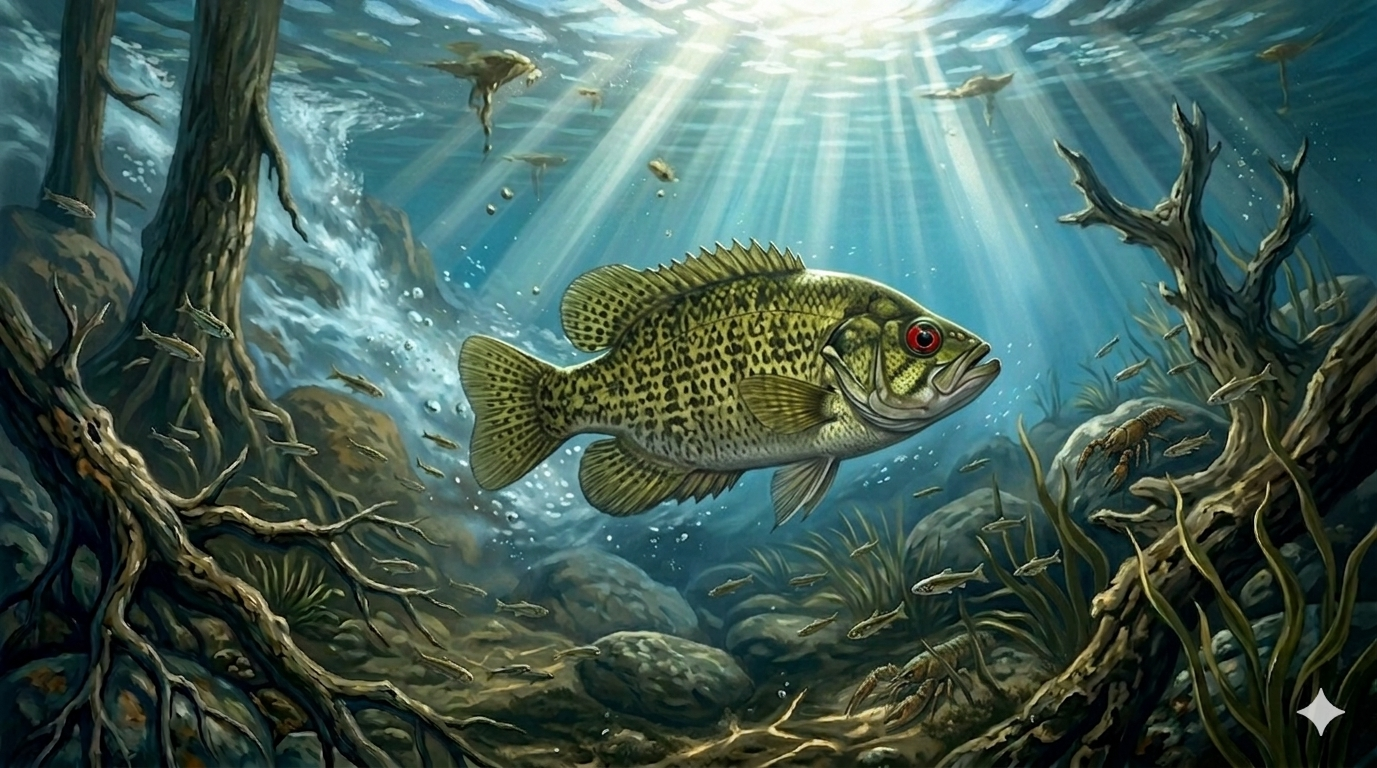
The "red-eye" — named for its distinctive crimson iris. Rock bass are the underappreciated workhorses of northeastern and midwestern rivers. They live exactly where their name suggests — on rocky bottoms, around boulders, and in the cobblestone runs of clear streams. They're aggressive, easy to catch, and make excellent live bait indicator fish. Where you find rock bass, smallmouth bass are usually nearby.
Habitat
Rocky-bottomed streams, clear rivers, and the rock-strewn shorelines of lakes. They need clean, cool water with rocky substrate — not quite as cold as trout water, not as warm as bluegill water. Rock bass are cover-oriented, tucking between boulders and using rocky overhangs as ambush points. Found primarily from the Great Lakes region through New England and into southeastern Canada.
Feeding Behavior
Crawfish, aquatic insects, minnows, and hellgrammites. Rock bass are aggressive feeders that will hit small jigs, spinners, and live bait with surprising intensity for their size. They share much of their diet with smallmouth bass — which is why the two species often coexist in the same stretches of river.
Spawning
Spawn in late spring at 60–70°F. Males build nests in gravel or between rocks in shallow water (1–4 ft). Males develop darker coloring and guard nests aggressively. Rock bass can be sight-fished on spawning beds in clear streams.
Seasonal Patterns
Spring
Pre-spawn and spawn. Aggressive near rocky shallows. Easy to catch.
Summer
Peak activity. Feeding aggressively around rocks and boulders. Great with light tackle.
Fall
Moving to deeper rocky areas. Still responsive to jigs and worms.
Winter
Deep and inactive near rocky bottom structure.
Top Lures for Rock Bass
Best Techniques
Pro Tips
Rock bass are excellent smallmouth indicators — if you're catching rock bass in a stream, smallmouth bass are likely nearby in slightly deeper or faster water.
They're aggressive enough to hit small crankbaits and spinners, making them fun on ultralight gear. A 4-foot ultralight rod and 4 lb test is the perfect rock bass setup.
Rock bass can change color rapidly to match their surroundings — from dark brown over rocks to pale tan over sand. The bright red eye is the constant ID feature.
Did You Know
Rock bass have one of the most dramatic color-changing abilities of any freshwater fish — they can shift from dark brown to nearly white in seconds to match their substrate. Their striking red eyes are caused by a reflective layer behind the retina, similar to walleye.
Regulations Note
No specific regulations in most states. Often grouped with other panfish.
Plan Your Next Trip
Get Your Rock Bass Strike Plan
Enter your location and date — the Darkhorse Strike Plan pulls live weather, barometric pressure, and solunar data to give you exact lures and techniques for today.