Freshwater Species Guide
Sauger
Sander canadensis · Percidae
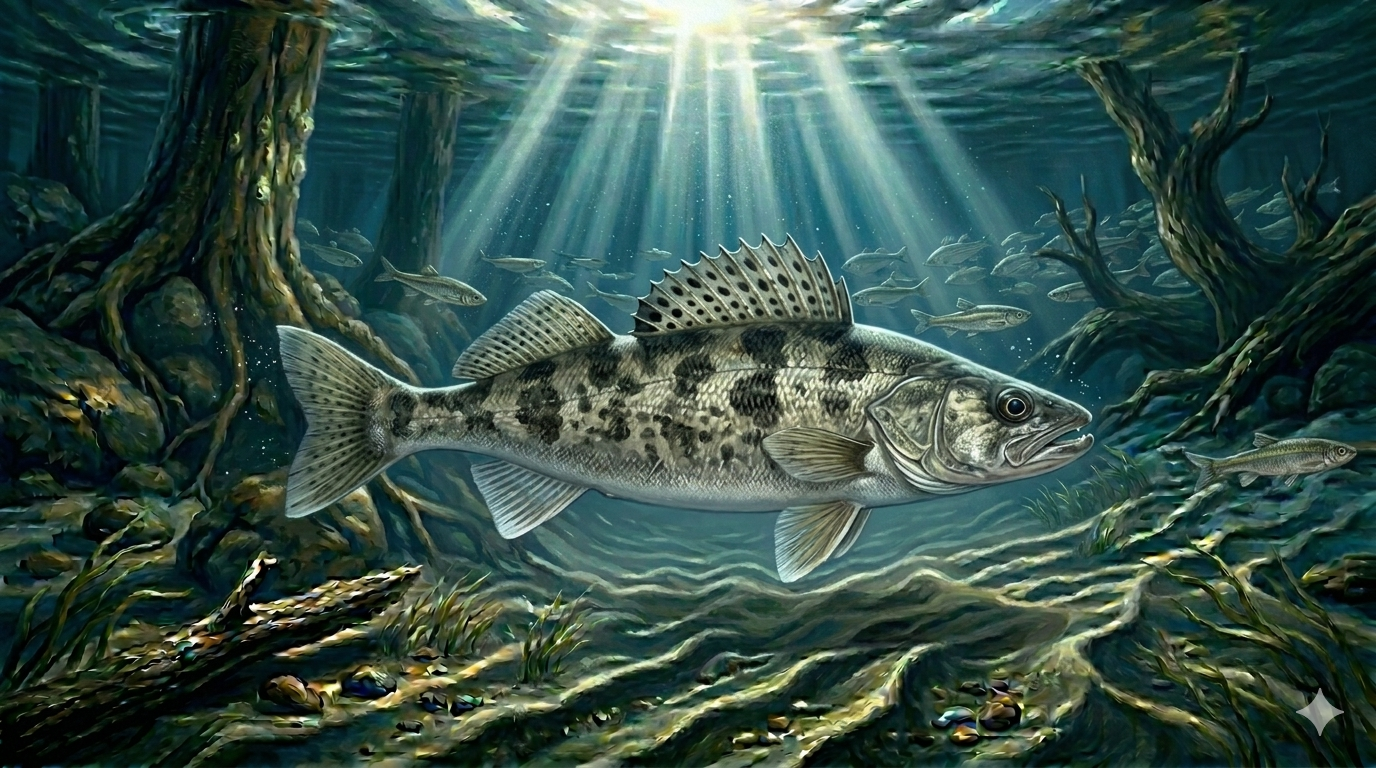
At a Glance
Ideal Temp
50–68°F
Typical Weight
0.5–3 lbs
Record Weight
8 lbs 12 oz
Average Length
10–18 inches
Lifespan
8–12 years
Peak Activity
Night / Low light
Skill Level
Intermediate
Overview
The walleye's grittier, more overlooked cousin. Sauger thrive in murkier, faster water than walleye and are seriously underappreciated by most anglers. But veteran river fishermen know the truth — during winter and early spring, sauger stack in tailwaters below dams in mind-boggling numbers and hit jigs just as hard as walleye. Same great table fare, significantly fewer crowds.
Habitat
Large, turbid rivers and reservoirs with significant current. Sauger are more murky-water tolerant than walleye and thrive in the lower Mississippi, Missouri, and Ohio River systems. They concentrate in tailwaters below dams particularly in winter and early spring — the most reliable and overlooked sauger fishery most anglers have never tried.
Feeding Behavior
Minnows, small shad, and anything that imitates a dying baitfish in current. Identical presentation approach to walleye — slow jigs, live minnows on bottom bouncers, and small crankbaits dragged along the bottom where current meets structure. Low-light and night conditions significantly improve sauger activity.
Spawning
Spawn slightly before walleye in early spring when water reaches 40–50°F. Move upstream to gravel bars and rocky shoals in current. Often co-mingle with walleye during spawning runs, and natural hybrids called saugeye are common where both species coexist. Saugeye are also widely stocked in midwest reservoirs.
Seasonal Patterns
Spring
Spawning run concentrates fish in tailwaters and rocky river shallows. Peak of the year.
Summer
Dispersed in main river channel. Less concentrated than spring but present in deeper current seams.
Fall
Pre-winter feeding increases. Moving toward dam tailwaters as temps drop.
Winter
Stacked in tailwaters below dams. Counterintuitively excellent winter fishing in the right locations.
Top Lures for Sauger
Best Techniques
Pro Tips
Tailwaters below dams are the key — sauger stack there in winter and early spring. Fish the current edges and slack water pockets directly downstream of the dam.
Use slightly smaller presentations than you'd use for walleye — 1/8 to 1/4 oz jigs and 3-inch plastics hit the sweet spot for sauger.
Night fishing in lit bridge areas and dam tailwaters produces excellent sauger — they're light-sensitive and use artificial light to hunt disoriented baitfish.
Many anglers fishing walleye in large rivers are actually catching sauger without realizing it. They're worth targeting intentionally — especially in winter.
Did You Know
Sauger have larger, more developed eyes relative to body size than walleye — an adaptation for hunting in turbid, near-zero-visibility water. Their eyes are so sensitive that bright sunlight is genuinely uncomfortable for them, which is why low-light and night fishing is so consistently productive.
Regulations Note
Often managed with walleye under same regulations.
Plan Your Next Trip
Get Your Sauger Strike Plan
Enter your location and date — the Darkhorse Strike Plan pulls live weather, barometric pressure, and solunar data to give you exact lures and techniques for today.