Freshwater Species Guide
Spotted Bass
Micropterus punctulatus · Centrarchidae
At a Glance
Ideal Temp
60–78°F
Typical Weight
1–4 lbs
Record Weight
10 lbs 4 oz
Average Length
10–16 inches
Lifespan
7–10 years
Peak Activity
Dawn / Dusk
Skill Level
Beginner
Overview
The underdog bass. Spotted bass get overshadowed by largemouth and smallmouth, but they're a legitimate species with their own personality — tolerant of current, able to thrive where the habitat between largemouth and smallmouth overlaps, and genuinely aggressive when they're on the feed. Learn to ID them correctly and you'll start appreciating what makes them unique.
Habitat
River channels, rocky banks with current, and reservoir points. Spotted bass overlap with both largemouth (in warm, vegetated areas) and smallmouth (in rocky, current-swept zones), but thrive in the transition between the two. In reservoirs, look for them around rocky bluff banks, main-lake points, and channel edges — often deeper than largemouth and shallower than you'd expect for smallmouth.
Feeding Behavior
Crawfish, shad, and small bluegill. Very similar diet to smallmouth. In rivers, they feed in current seams and at the head of pools. In reservoirs, they key on shad schools along channel edges and rocky points.
Spawning
Spawn when water reaches 60–68°F, similar timing to smallmouth. Prefer gravel and rocky substrate in 2–8 ft. Spotted bass can hybridize with both largemouth and smallmouth in overlap zones, which is one reason accurate ID matters.
Seasonal Patterns
Spring
Staging on rocky points and channel banks. Aggressive pre-spawn feeding on crawfish.
Summer
Move deep on main lake structure. More tolerant of current than largemouth — hold in river sections.
Fall
Following shad schools on points and channel edges. Reaction bites improve dramatically.
Winter
Deep and grouped. Finesse presentations near main channel structure.
Top Lures for Spotted Bass
Best Techniques
Pro Tips
Spotted bass key heavily to current in reservoirs. Find the areas where river current still flows through the impoundment and you'll find spots stacked up.
In rivers, spots and smallmouth often share the same rocky banks — use the same presentations: tube jigs, ned rigs, and crawfish-imitating soft plastics.
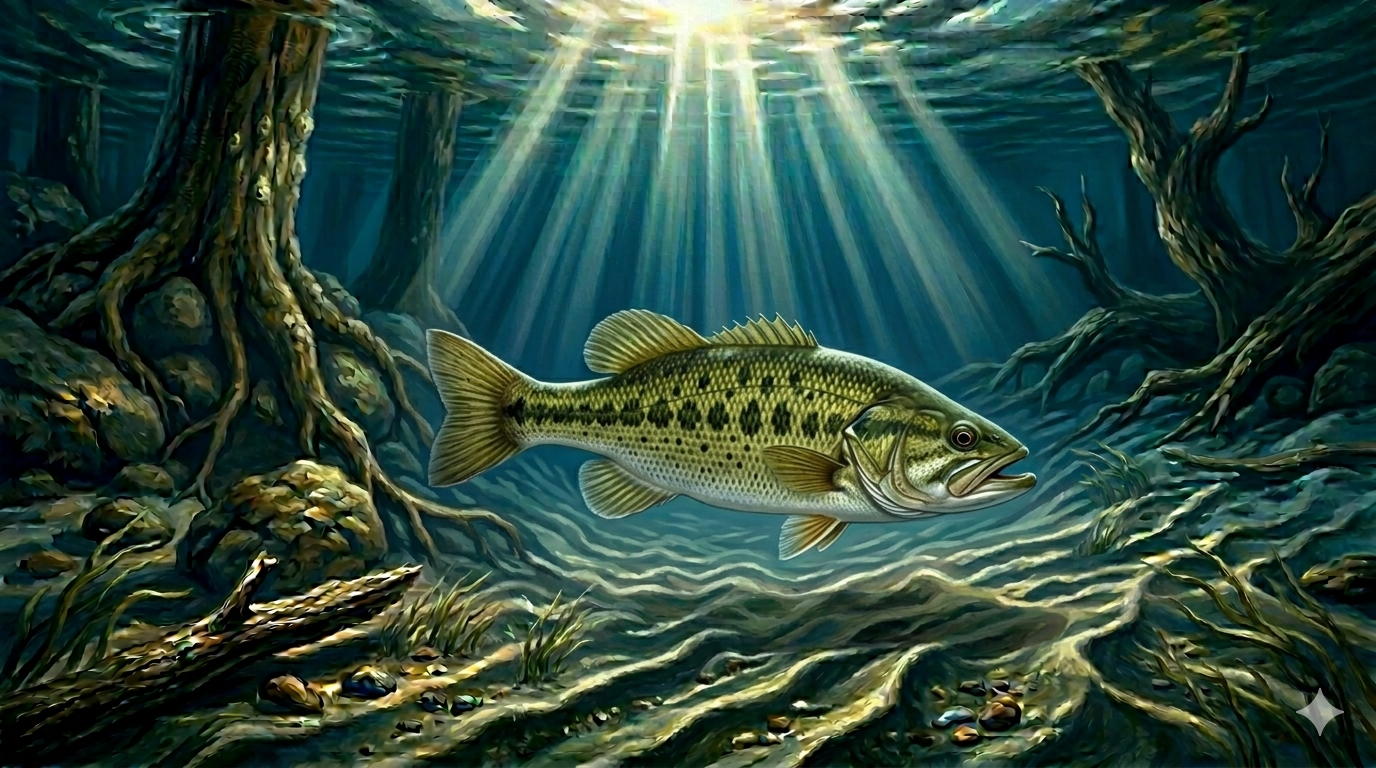
Check the spot pattern below the lateral line to confirm ID. Spots have a rougher, more distinctive lateral line pattern than largemouth and lack the jaw extension of largemouth.
Did You Know
Spotted bass in California's clear Sierra foothill reservoirs have grown to record-breaking sizes — regularly producing fish over 10 lbs. California is arguably the best state in the country for giant spotted bass.
Regulations Note
Check state minimums. Often same regulations as largemouth.
Plan Your Next Trip
Get Your Spotted Bass Strike Plan
Enter your location and date — the Darkhorse Strike Plan pulls live weather, barometric pressure, and solunar data to give you exact lures and techniques for today.