Freshwater Species Guide
Striped Bass (Freshwater)
Morone saxatilis · Moronidae
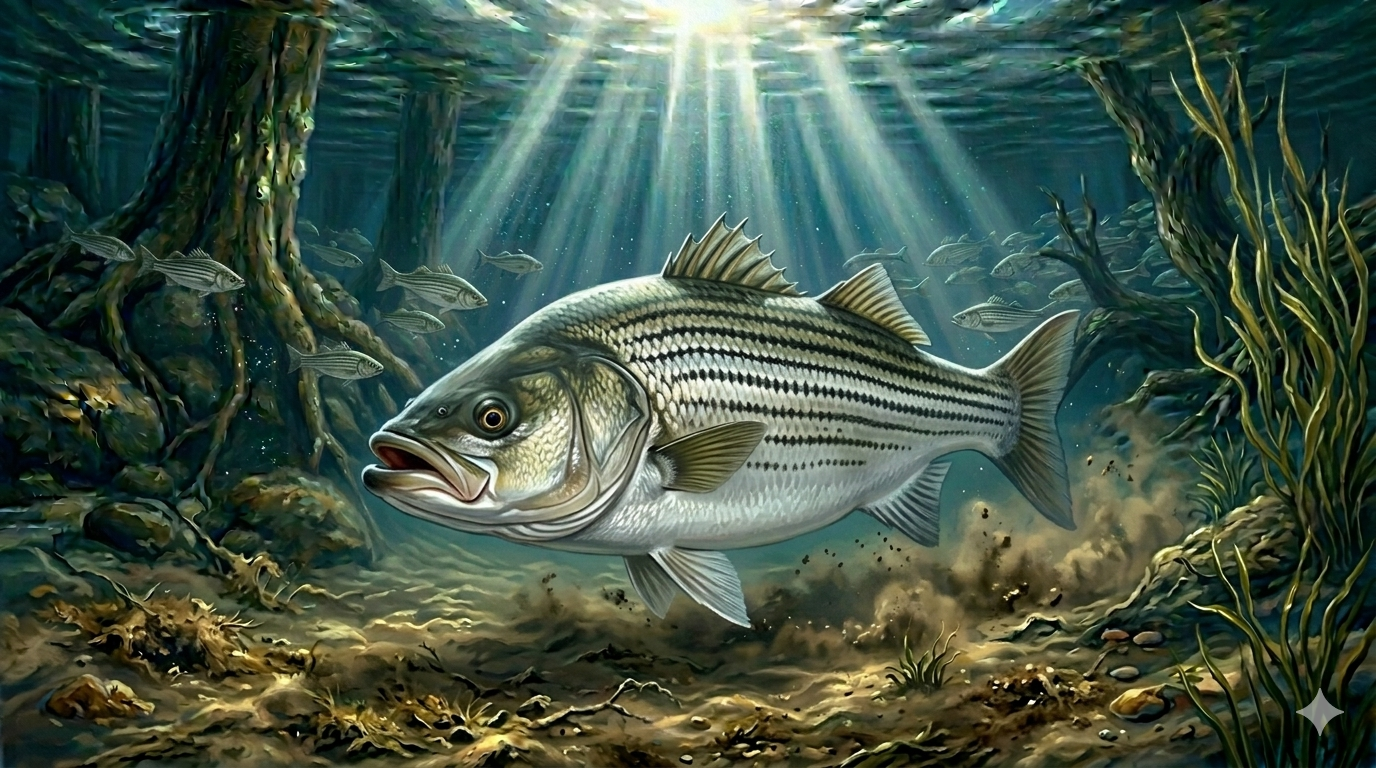
At a Glance
Ideal Temp
55–70°F
Typical Weight
5–20 lbs
Record Weight
81 lbs 14 oz
Average Length
20–40 inches
Lifespan
20–30 years
Peak Activity
Dawn / Dusk
Skill Level
Intermediate
Overview
When striped bass are landlocked in reservoirs, something remarkable happens — they become relentless schooling predators that blitz shad on the surface at dawn in explosive attacks anglers call "jump fishing." A school of reservoir stripers crashing shad at sunrise is one of the great spectacles in freshwater fishing. Big fish, big water, and action that demands you get there before sunrise.
Habitat
Large, deep reservoirs with significant shad populations. They suspend in cooler water during summer, tracking their primary prey (shad and herring) through the water column. In rivers they make spring runs. Landlocked striper fisheries are concentrated in the Southeast, Mid-Atlantic, and increasingly in large southwestern reservoirs.
Feeding Behavior
Dedicated shad and herring hunters. Reservoir stripers follow shad schools constantly — when shad move, stripers move with them. At dawn and dusk they push shad to the surface for spectacular topwater attacks. In deep summer, they suspend below thermoclines and can be caught on vertical presentations through electronics-located schools.
Spawning
Landlocked populations attempt to spawn in river tributaries during spring but rarely produce successful natural reproduction. Most reservoir striper populations are maintained by stocking programs. Their ocean-evolved spawning migrations don't translate cleanly to freshwater systems without significant current and long river runs.
Seasonal Patterns
Spring
Most accessible season. Moving shallow before stratification. Jump fishing at dawn is at its best.
Summer
Deep in cool water layer below thermocline. Dawn and dusk surface activity still occurs but fish are harder to locate midday.
Fall
Outstanding fall fishing as fish move shallower following cooling water and shad migrations. Best topwater of the year.
Winter
Grouped deep in main lake. Less surface activity but catchable on live bait and vertical presentations.
Top Lures for Striped Bass (Freshwater)
Best Techniques
Pro Tips
Find the shad, find the stripers. Use electronics to locate suspended baitfish schools in summer, then troll or vertically jig directly through them.
Dawn is critical — stripers push shad to the surface and you can see explosions from 500 yards. Get on the water before light and position ahead of where you expect the school.
For big fish, live shad on a circle hook under a balloon or cork, drifted over suspended schools, is the most consistent technique for fish over 20 lbs.
When jump fishing, don't motor into the blitz — cut the engine 100 yards away and cast into the melee. Running a boat into a surface school immediately shuts it down.
Did You Know
Freshwater striped bass can live 20+ years, but most landlocked populations are maintained through stocking because natural reproduction rarely succeeds. The world record 81 lb 14 oz striped bass came from a landlocked reservoir — larger than the vast majority of ocean-caught specimens.
Regulations Note
Size and bag limits vary by state. Landlocked populations are stocked.
Plan Your Next Trip
Get Your Striped Bass (Freshwater) Strike Plan
Enter your location and date — the Darkhorse Strike Plan pulls live weather, barometric pressure, and solunar data to give you exact lures and techniques for today.