Freshwater Species Guide
White Bass
Morone chrysops · Moronidae
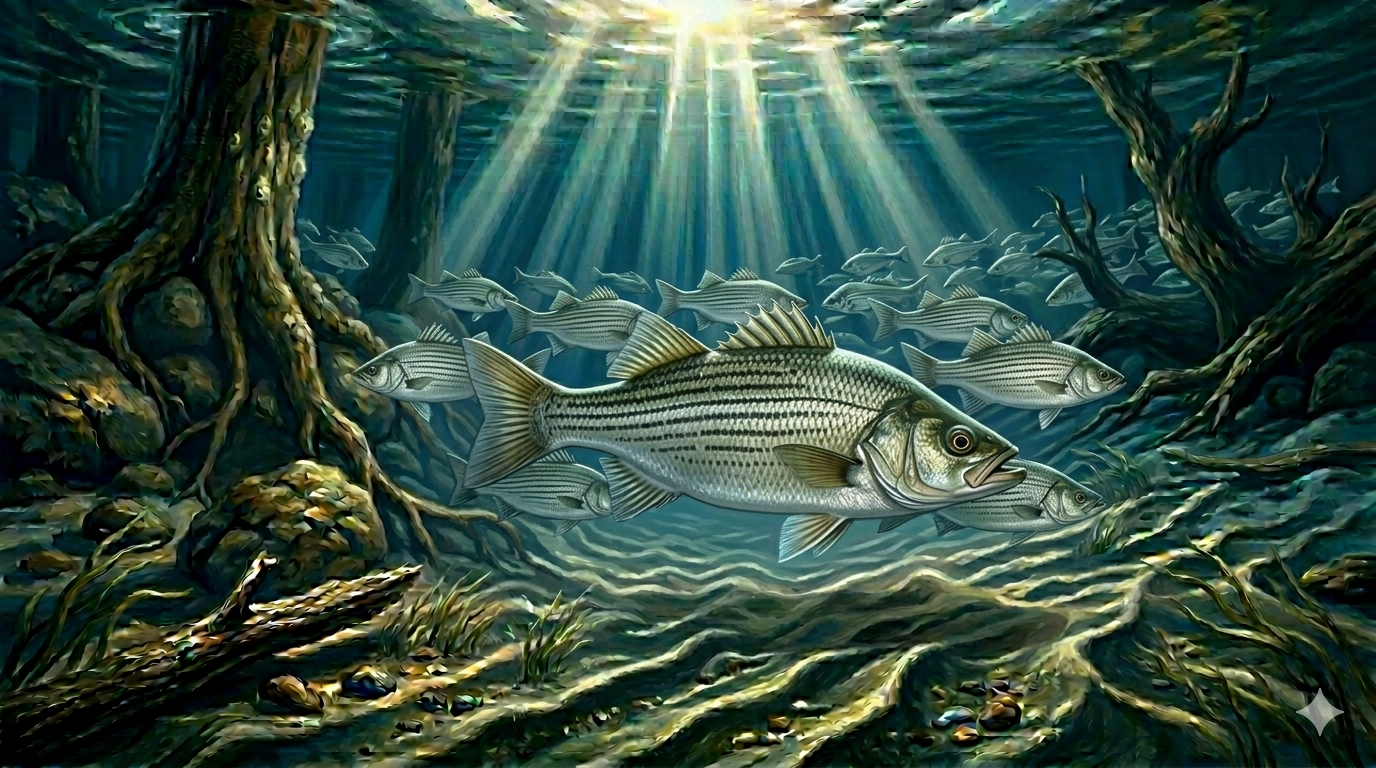
At a Glance
Ideal Temp
60–75°F
Typical Weight
0.5–2 lbs
Record Weight
6 lbs 13 oz
Average Length
10–14 inches
Lifespan
4–7 years
Peak Activity
Spring spawn run / Dawn
Skill Level
Beginner
Overview
The most underrated spring event in freshwater fishing. When white bass make their spawning run up rivers and tributaries in April and May, the action is genuinely ridiculous — fish stacked from bank to bank, hitting anything thrown at them. One rod, one small jig, and you can land 50 fish in a morning. Every serious angler should experience a white bass run at least once.
Habitat
Open-water schooling fish in lakes and reservoirs for most of the year. In summer and fall they chase shad schools on the surface — look for birds working the water and you'll find white bass underneath. In spring, they move aggressively into rivers and tributaries for spawning runs where they concentrate in extraordinary numbers.
Feeding Behavior
Pure shad-chasers. White bass are pelagic schooling predators that corral baitfish cooperatively. In open water they crash shad schools from below in violent surface explosions. Small white or chartreuse jigs, shad-imitating lures, and spinners all produce when fish are actively feeding — which during a spring run is basically always.
Spawning
Spawn when water hits 58–65°F, typically April–May. Move into rivers and tributaries in massive numbers. Males arrive first in extraordinary concentrations. The entire run can last 2–4 weeks and produces the most reliable, fast-paced fishing of the year.
Seasonal Patterns
Spring
Spawning run — the peak of the year. Fish stacked in rivers, hitting everything. Fast-paced, high-volume action.
Summer
Dispersed in main lake following shad schools. Surface blitzes at dawn and dusk when they corner baitfish.
Fall
Following shad migrations. Schooling activity picks up significantly as water cools.
Winter
Schooled deep in main lake. Less accessible but catchable with vertical jigging.
Top Lures for White Bass
Best Techniques
Pro Tips
During the spawn run, find the current seam at the tributary mouth — fish stack there before moving upstream. Small white or chartreuse jigs on 1/8 oz heads are the standard.
In summer, watch for "boils" — white bass blitzing shad on the surface. When you spot one, get there fast and cast immediately before the school sounds.
Light spinning tackle (6 lb test, 7-foot light action rod) makes white bass fishing genuinely fun. They're not huge but they fight clean and fast.
White bass and stripers will sometimes school together in reservoirs. If you're in a blitz and hooking unusually large fish, you may be into stripers mixed with whites.
Did You Know
White bass are the state fish of Oklahoma and one of the parent species of the hybrid striped bass (called a "wiper") — a cross between white bass females and striped bass males that produces a larger, more powerful fish stocked widely in reservoirs.
Regulations Note
Generally very liberal bag limits during spawn run.
Plan Your Next Trip
Get Your White Bass Strike Plan
Enter your location and date — the Darkhorse Strike Plan pulls live weather, barometric pressure, and solunar data to give you exact lures and techniques for today.